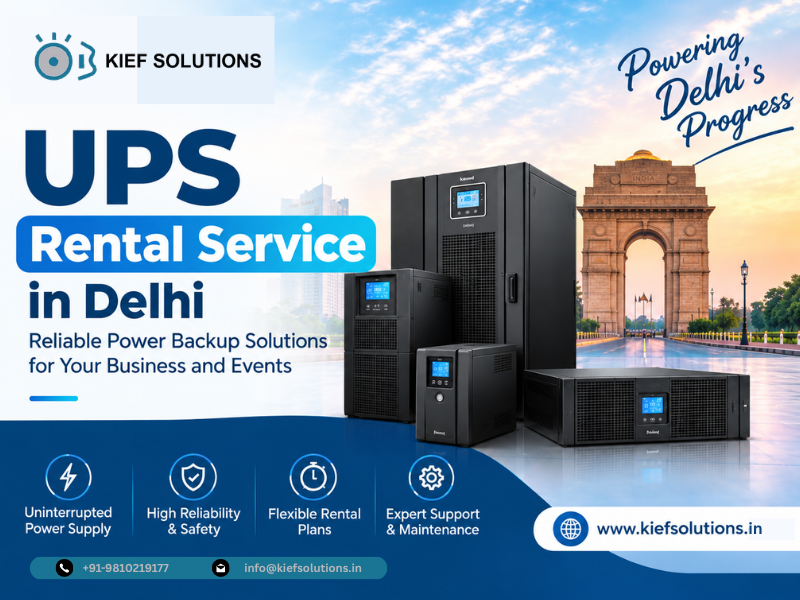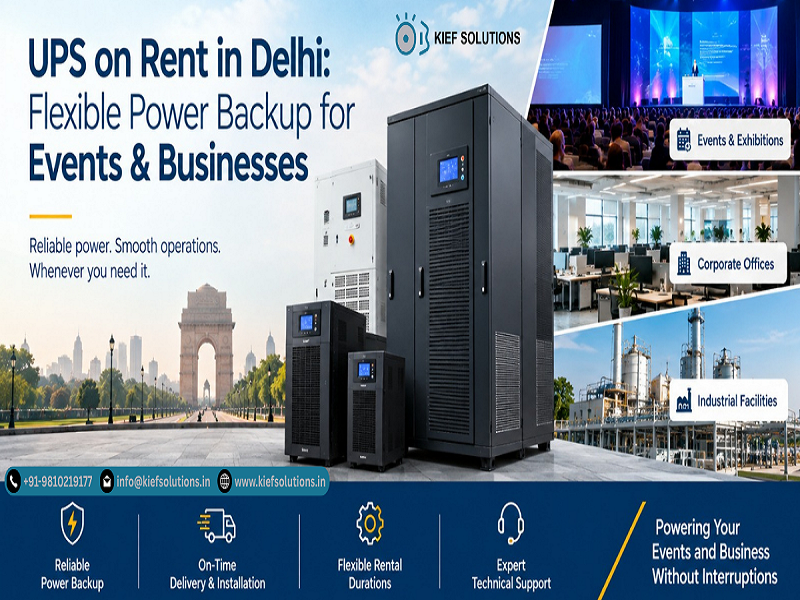
UPS rental services provide flexible backup power for industrial facilities, commercial offices, data centres, IT infrastructure and critical applications. Businesses can rent UPS systems for maintenance, temporary projects, equipment upgrades and emergency requirements without purchasing permanent equipment, helping maintain power continuity while managing investment and operational requirements.
Power interruptions can affect production lines, IT infrastructure, business operations, communication systems and critical equipment. For organisations where uninterrupted electricity is essential, even a short outage can result in operational delays, data interruptions, equipment shutdowns or financial losses.
Purchasing a UPS system may not always be practical, especially when backup power is required for a temporary project, facility expansion, equipment testing, planned maintenance or a specific operational period. In such situations, UPS rental provides a flexible alternative by allowing businesses to arrange backup power equipment for the duration of their requirement.
From industrial plants and corporate offices to data centres, infrastructure projects and events, UPS rental services help organisations maintain power continuity without making a permanent investment in backup equipment.
What Is UPS Rental?
UPS rental is a service that allows businesses to use an Uninterruptible Power Supply (UPS) system for a defined period instead of purchasing the equipment outright.
A rented UPS provides backup power to connected equipment during interruptions in the main electricity supply. Depending on the system type and configuration, it may also help protect sensitive equipment from voltage fluctuations and other electrical disturbances.
UPS rental is suitable for both temporary and long-term requirements, including:
- Temporary projects
- Industrial expansion
- Equipment replacement
- Planned electrical maintenance
- Emergency backup requirements
- Events and exhibitions
- Infrastructure upgrades
- Additional power protection for existing facilities
The UPS capacity, battery backup duration and system configuration should be selected according to the connected load, application and operating conditions.
Why Businesses Choose UPS Rental Services
Businesses may require additional backup power for different reasons. Purchasing a new UPS system involves capital expenditure, equipment selection, installation and long-term ownership responsibilities.
UPS rental offers an alternative for organisations that need reliable backup power for a specific period or want to avoid purchasing additional equipment for temporary requirements.
1. Lower Initial Investment
Purchasing a high-capacity UPS system can involve significant upfront investment. Renting allows businesses to use suitable backup equipment without making the full purchase investment.
This can be particularly useful for temporary projects, facility expansion and emergency power requirements.
2. Flexible Rental Duration
Businesses may require a UPS for a few days, several weeks, months or a longer project period.
Rental arrangements can be planned according to the duration and nature of the requirement, subject to equipment availability and agreed rental terms.
3. Suitable for Temporary Projects
Temporary infrastructure, construction projects, facility upgrades and equipment installation may require backup power only during a specific operational period.
UPS rental helps businesses arrange suitable equipment without purchasing a permanent system for a short-term requirement.
4. Backup During Maintenance or Replacement
When an existing UPS is undergoing maintenance, replacement or capacity upgrades, temporary backup power may be required to keep critical equipment operational.
A rented UPS can help bridge the power protection requirement during the transition period, subject to appropriate installation and load compatibility.
5. Scalable Capacity Options
Businesses may require different UPS capacities depending on their application, connected load and operational requirements.
Rental availability across different capacities can help organisations arrange a suitable system for small equipment loads, commercial infrastructure or larger industrial and critical power requirements.
6. Installation and Technical Assistance
UPS rental arrangements may include delivery, installation, commissioning, testing and technical assistance, depending on the agreed scope of service.
Professional installation and testing help ensure that the system is configured appropriately before connected equipment is placed under backup protection.
UPS Rental Services for Industrial Applications
Industrial facilities depend on electrical power to operate machinery, production systems, automation equipment, control panels and monitoring infrastructure. An unexpected interruption can affect production schedules, process continuity and equipment performance.
UPS rental can help industrial businesses arrange temporary power protection during:
- Manufacturing plant expansion
- Production line upgrades
- Electrical maintenance and shutdowns
- Equipment installation and testing
- Temporary industrial projects
- Replacement of existing UPS systems
- Additional backup power requirements
Industrial UPS rental is particularly useful when businesses need a backup solution for a defined period without purchasing equipment that may not be required permanently.
Equipment That May Require Industrial UPS Backup
Depending on the power configuration and UPS capacity, industrial UPS systems may support:
- PLC and automation systems
- Industrial control panels
- Monitoring and communication equipment
- Process control systems
- Computers and workstations
- Industrial networking equipment
- Critical electronic equipment
The UPS must be selected according to the connected equipment's power requirements, load characteristics and operating conditions.
UPS Rental for Commercial Applications
Commercial facilities depend on power for business operations, communication, IT systems, security infrastructure and customer-facing services. Power interruptions may affect employees, customers and daily business activities.
UPS rental can provide temporary or additional backup power for commercial establishments that need to maintain continuity during outages or electrical infrastructure changes.
Commercial Applications of UPS Rental
Corporate Offices: Backup for computers, networking equipment, communication systems, workstations and other essential office infrastructure.
Banks and Financial Institutions: Power protection for compatible IT systems, communication infrastructure and other critical electronic equipment.
Retail Stores and Commercial Establishments: Temporary backup for billing systems, computers, security equipment, networking and essential business operations.
Call Centres: Power backup for workstations, communication systems, network infrastructure and other essential equipment.
Healthcare Facilities: Suitable UPS configurations may support compatible medical equipment, IT infrastructure, monitoring systems and other critical loads, subject to equipment requirements.
Educational Institutions: Backup power for computer labs, servers, networking systems, laboratories and administrative infrastructure.
UPS Rental for Critical Power Applications
Critical power applications require reliable electricity to keep essential equipment operating. These applications may involve sensitive electronics, IT systems, communication infrastructure, control equipment or other systems where power interruptions can cause operational disruption.
A suitable UPS rental system can provide backup power during interruptions and support continuity for compatible equipment.
Data Centres and Server Rooms
Data centres and server rooms rely on UPS systems to support servers, storage devices, networking equipment and critical IT infrastructure.
UPS rental can be useful during:
- Data centre expansion
- Server migration
- UPS replacement
- Planned maintenance
- Temporary capacity requirements
- Infrastructure upgrades
IT and Networking Infrastructure
IT infrastructure includes routers, switches, servers, communication systems, security equipment and other electronic devices.
A suitable online UPS rental system may be considered when stable power and continuous protection are required for sensitive IT equipment.
Communication Systems
Telecommunication and communication infrastructure may require reliable backup power for compatible equipment, network systems and essential communication devices.
Critical Control Systems
Industrial and commercial facilities may have control and monitoring systems that require continuous power to support operational processes. Temporary UPS rental can help provide backup during equipment replacement, maintenance or upgrades.
UPS Rental for Events and Temporary Power Requirements
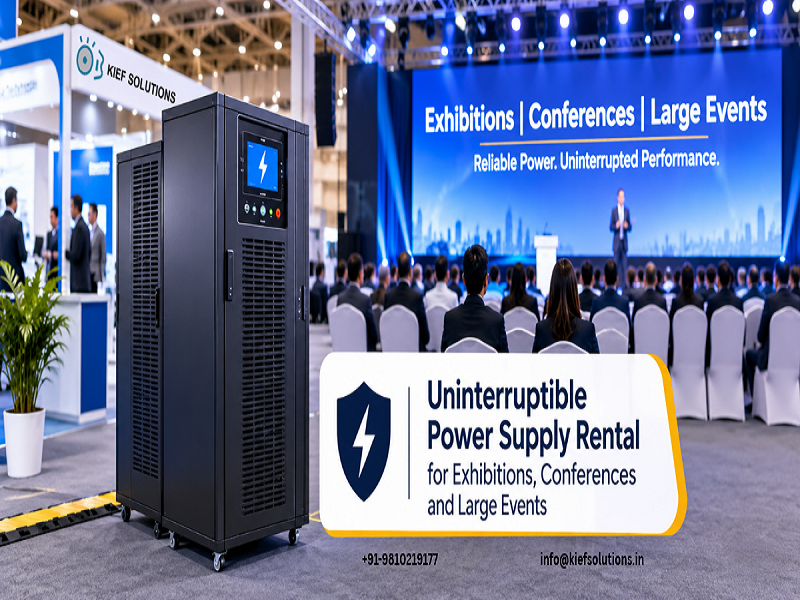
UPS rental is also useful for temporary events where power continuity is required for electronic and technical equipment.
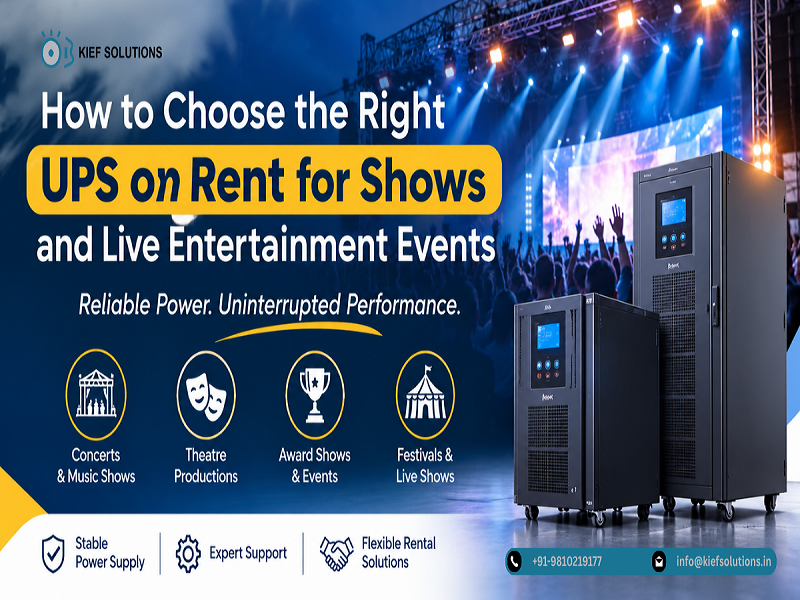
Events such as exhibitions, conferences, corporate functions, concerts, festivals, trade shows and sports events may require backup power for essential equipment.
Event Applications
- Audio and sound systems
- LED displays and screens
- Event lighting control equipment
- Registration and ticketing systems
- Computers and networking
- Live production equipment
- Communication infrastructure
- Presentation and AV systems
The UPS capacity should be selected according to the actual connected load and equipment characteristics. Event organisers should also coordinate UPS requirements with the venue's electrical setup and other power arrangements.
Types of UPS Systems Available for Rental
Different applications require different UPS technologies and configurations.
1. Online UPS Rental
Online UPS systems use double-conversion technology to provide continuous power protection for compatible critical equipment.
They are commonly considered for:
- Data centres
- Servers and IT infrastructure
- Industrial control systems
- Critical commercial equipment
- Medical and laboratory equipment
- Communication systems
Online UPS systems are suitable for applications where power quality and continuous protection are important.
2. Offline UPS Rental
Offline UPS systems provide backup power when the main electrical supply fails. They may be suitable for certain applications where the connected equipment's power protection requirements are compatible with the system.
Their suitability depends on equipment sensitivity, power conditions and the required level of protection.
3. Modular UPS Rental
Modular UPS systems use a modular architecture, allowing capacity to be configured according to the installed modules and system design.
They may be suitable for critical infrastructure, data centres, commercial facilities and other applications where capacity flexibility is important.
The actual system configuration, redundancy and scalability should be confirmed before deployment.
How to Choose the Right UPS Rental Capacity
Selecting the correct UPS capacity is essential for reliable backup performance. A UPS that is undersized may not support the connected equipment, while an unnecessarily large system may increase rental and installation costs.
1. Calculate the Connected Load
Prepare a list of equipment that needs backup power. Include the rated power consumption of computers, servers, networking equipment, control systems and other critical devices.
2. Understand Power Requirements
UPS capacity is commonly expressed in VA or kVA, while equipment consumption may be expressed in watts.
The relationship between kW and kVA depends on the power factor. Therefore, UPS capacity should not be selected using wattage alone.
3. Determine Required Backup Time
Identify how long the equipment must remain operational during a power interruption.
Backup time depends on the UPS configuration, battery capacity, connected load, battery condition and operating conditions.
4. Consider Equipment Type
Different equipment has different power characteristics. Motors, industrial systems, servers, sensitive electronics and medical equipment may require different UPS configurations.
5. Check Input and Output Configuration
Confirm the electrical supply requirements, including voltage, phase, frequency and input/output configuration.
6. Consider Future Load Requirements
If the connected load may increase during the rental period, discuss the possibility of selecting a suitable capacity with additional margin or a different configuration.
UPS Rental Service Process
A professionally organised UPS rental service generally follows a structured process to understand the application and deploy the suitable equipment.
Step 1: Requirement Assessment
The rental provider reviews the application, connected load, required backup duration, site location and rental period.
Step 2: UPS Selection
The appropriate UPS type and capacity are identified according to the electrical requirements and application.
Step 3: Delivery and Installation
The UPS system is delivered to the required site and installed according to the agreed project scope and installation requirements.
Step 4: Testing and Commissioning
The system is checked, tested and commissioned before the connected equipment is placed under backup protection.
Step 5: Technical Support
Technical support and maintenance assistance may be provided during the rental period according to the agreed service arrangement.
UPS Rental Services by KIEF Solutions
KIEF Solutions provides UPS rental services and temporary power backup solutions for industrial, commercial, IT, corporate, event and critical power applications.
With a range of UPS rental capacities and configurations, KIEF Solutions helps businesses arrange power backup according to their load requirements, application and rental duration.
Its UPS rental services can be considered for:
- Industrial facilities and manufacturing units
- Corporate offices and commercial establishments
- Data centres and server rooms
- IT and networking infrastructure
- Banks and financial institutions
- Hospitals and medical facilities
- Call centres
- Exhibitions, conferences and corporate events
- Infrastructure and temporary projects
- Planned maintenance and equipment replacement
UPS Capacities Available for Rental
UPS rental requirements can vary from smaller equipment loads to large industrial and critical power applications. KIEF Solutions offers rental systems across multiple capacities, including:
- 10 KVA UPS
- 15 KVA UPS
- 20 KVA UPS
- 30 KVA UPS
- 40 KVA UPS
- 50 KVA UPS
- 60 KVA UPS
- 70 KVA UPS
- 100 KVA UPS
- 120 KVA UPS
- 180 KVA UPS
- 200 KVA Modular UPS
- 250 KVA UPS
- 260 KVA UPS
- 300 KVA UPS
- 400 KVA UPS
- 500 KVA UPS
- 600 KVA UPS
Available configurations, UPS types and deployment arrangements depend on equipment availability and project requirements.
Businesses can explore KIEF Solutions' UPS rental services to discuss the required capacity, application, rental period and installation requirements.
Why Choose KIEF Solutions for UPS Rental?
Selecting a suitable rental provider is important when backup power is required for critical operations or temporary projects.
Businesses should evaluate the equipment range, technical understanding, installation arrangements, testing procedures, support availability and ability to address their application requirements.
KIEF Solutions offers:
- Multiple UPS capacity options
- Online and other UPS configurations according to requirements
- Industrial and commercial UPS rental solutions
- Temporary and project-based power backup
- Rental support for critical IT and infrastructure applications
- Delivery, installation and commissioning according to the agreed scope
- Testing and technical assistance
- UPS rental solutions for events and corporate requirements
The appropriate solution is determined by the connected load, required backup time, equipment type, installation conditions and rental duration.
Conclusion
UPS rental services provide a practical option for businesses that require temporary, additional or replacement power backup. From industrial facilities and corporate offices to data centres, critical infrastructure and temporary events, rented UPS systems can help organisations maintain power continuity without purchasing permanent equipment for every requirement.
Choosing the right UPS rental system requires careful consideration of connected load, capacity, backup duration, UPS type, electrical configuration and site conditions.
KIEF Solutions provides UPS rental solutions across multiple capacities for industrial, commercial, IT, corporate, event and critical power applications. Businesses can discuss their power requirements and rental duration to identify a suitable backup solution for their operations.
Frequently Asked Questions
1. What is UPS rental?
UPS rental is a service through which businesses rent an Uninterruptible Power Supply system for a specific period instead of purchasing it. It is suitable for temporary projects, maintenance, emergencies, equipment upgrades and additional backup requirements.
2. Why should a business rent a UPS instead of buying one?
Renting can reduce the initial investment and provide flexibility when backup power is needed temporarily. It may be useful during facility expansion, equipment replacement, maintenance periods, emergency situations and short-term projects.
3. Which industries require UPS rental services?
UPS rental services are commonly used in manufacturing, industrial facilities, data centres, corporate offices, hospitals, banks, IT infrastructure, telecom systems, commercial establishments, events and infrastructure projects.
4. What UPS capacities are available for rental?
UPS rental capacities vary according to the supplier's equipment range. KIEF Solutions offers rental options across multiple capacities, from smaller UPS systems to high-capacity systems, including 10 KVA, 15 KVA, 20 KVA, 40 KVA, 70 KVA, 100 KVA, 250 KVA, 300 KVA, 500 KVA and 600 KVA configurations, subject to availability and requirements.
5. Can I rent a UPS for a short-term project?
Yes. UPS rental may be suitable for short-term projects, temporary installations, planned maintenance, infrastructure upgrades, equipment testing, emergency backup and other time-limited power requirements.
6. Does UPS rental include installation and technical support?
Depending on the agreed rental scope, UPS rental may include delivery, installation, commissioning, testing, battery arrangements, maintenance and technical support. Confirm the included services before finalising the rental agreement.
7. How do I select the right UPS capacity?
UPS capacity should be selected according to total connected load, equipment power characteristics, required backup duration, power factor, input/output configuration and operating conditions. A load assessment is recommended before selecting the system.
8. Can I rent an online UPS for critical equipment?
Yes. Online UPS systems are commonly used for critical equipment such as servers, networking systems, industrial controls and other sensitive electronic devices requiring continuous power protection. The suitable configuration depends on the connected load and application.
9. Is UPS rental available for events and exhibitions?
Yes. UPS rental can support exhibitions, conferences, corporate events, concerts, festivals, trade shows, sports events and other temporary power requirements. The system should be selected according to the equipment load and venue electrical arrangements.
10. How can I request a UPS rental quotation?
Contact KIEF Solutions with details of your required UPS capacity, application, site location, rental duration, connected load and backup time. These details help the team assess your requirements and recommend a suitable rental arrangement.